Retailers
aaaaaaaa

Roberto Bielli – DOSO PLANT BALLING METHODE – Part Four

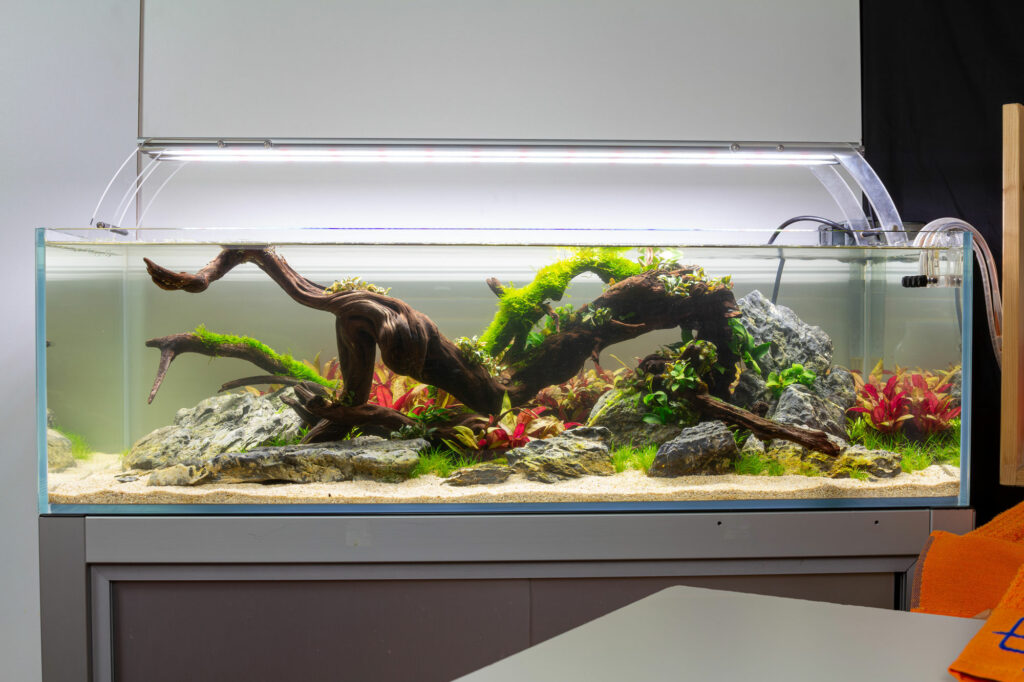
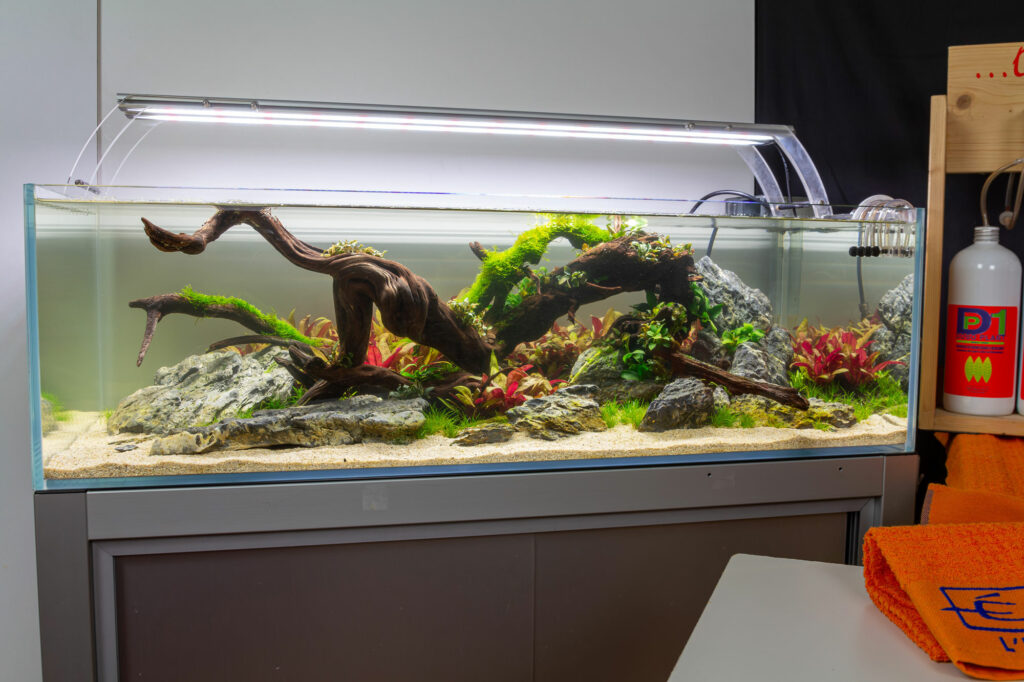
FOURTH STEP – FERTILISATION AND TANK MAINTENANC

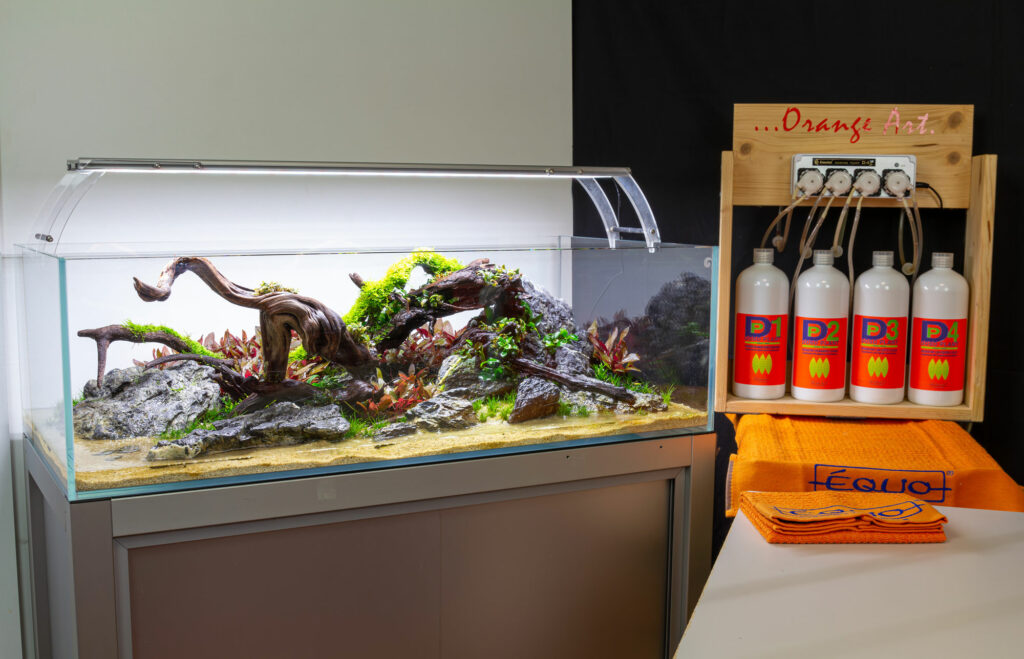
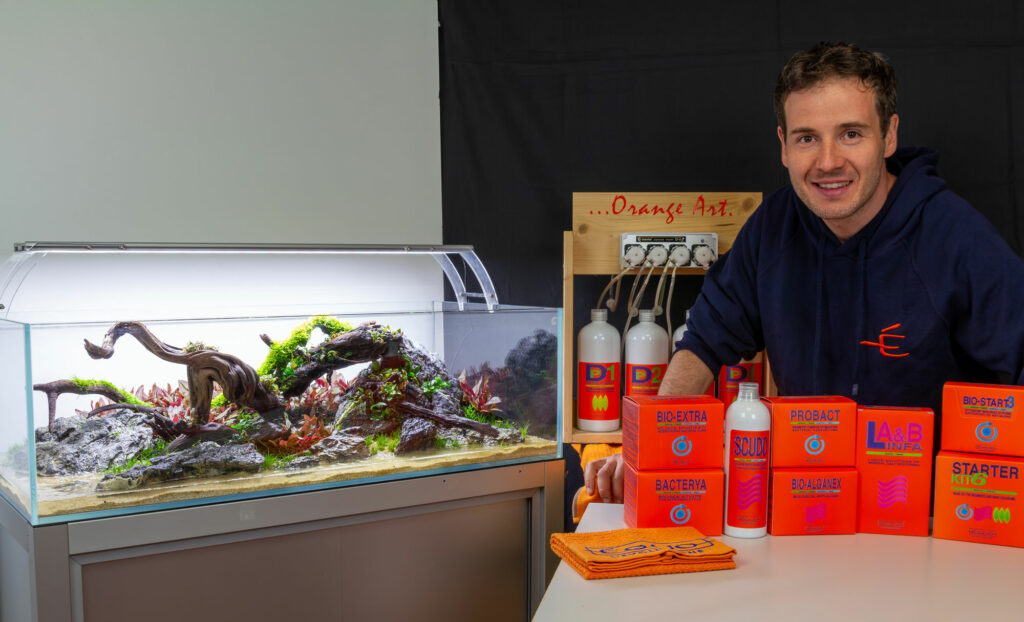
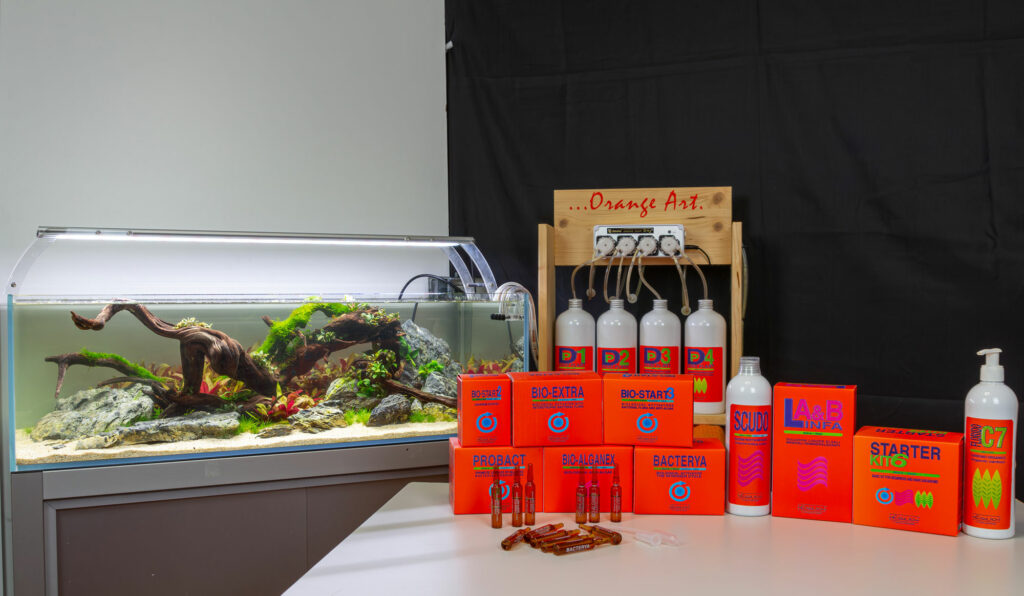
Products Used:
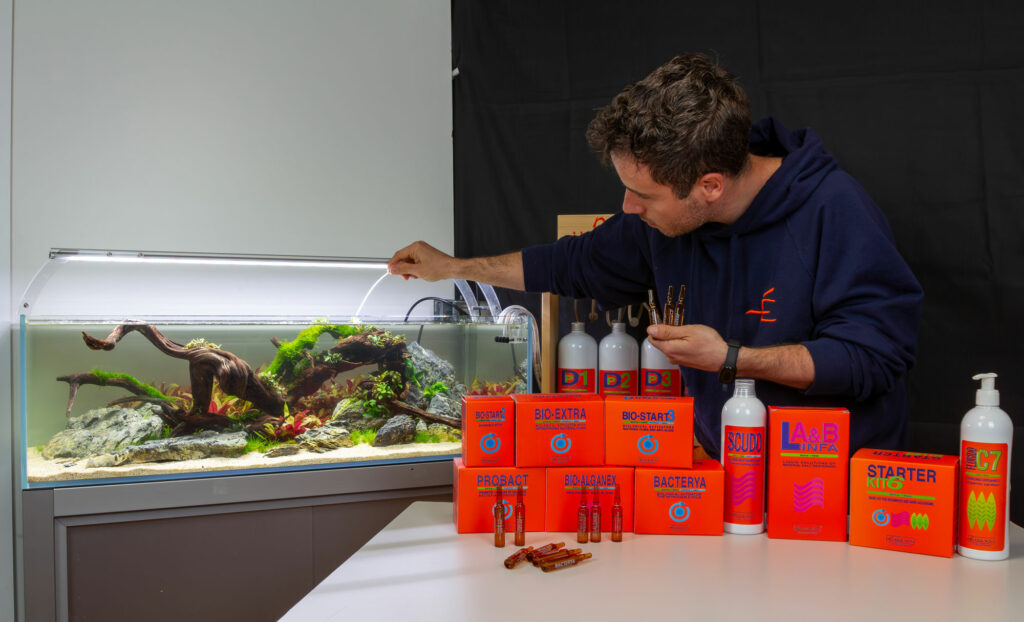
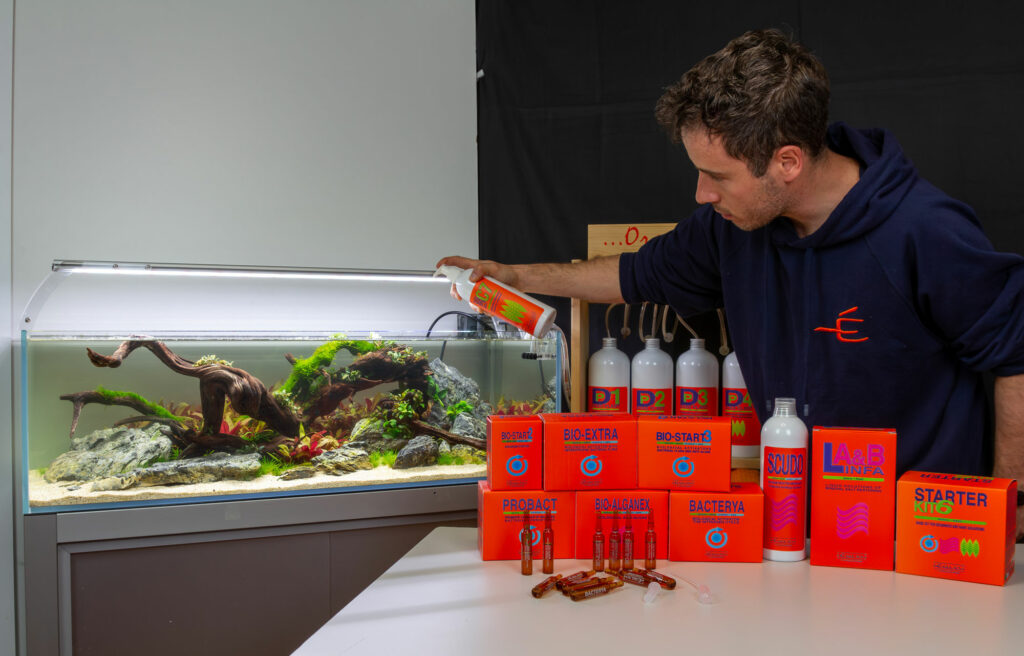
DOSOPLANT 1-2-3-4 (Dosometric pumps), SCUDO, LINFA A & B, BACTERYA, NUTROBACT, BIO-ALGANEX, FLORIDO C7.


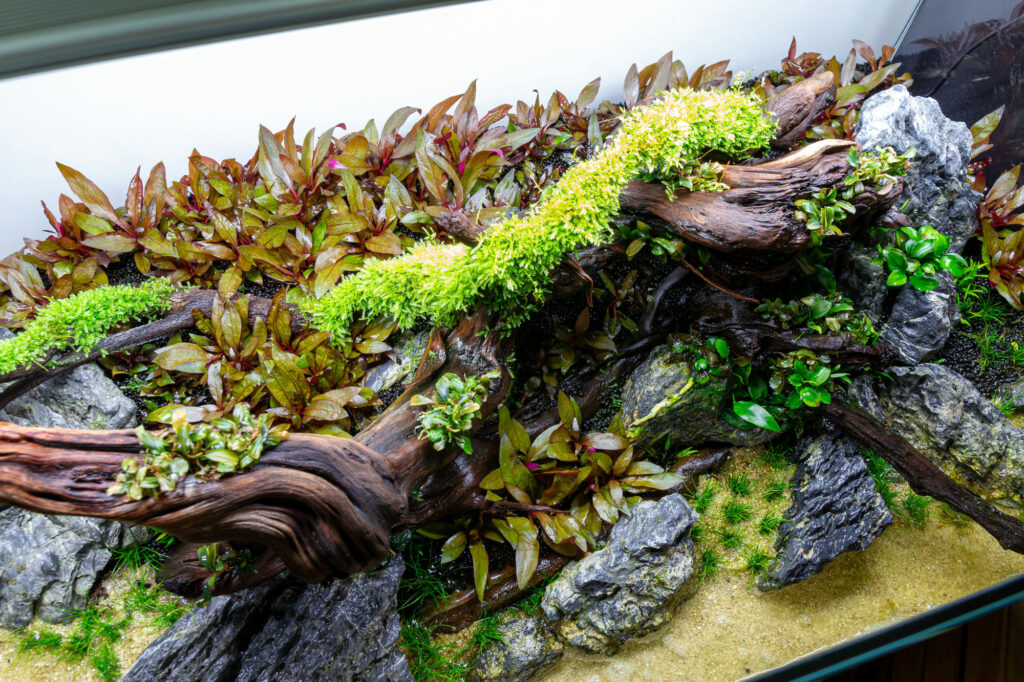
Plants Used:
– Alternanthera reineckii ‘Mini’
– Bucephalandra sp. ‘Red’
– Cryptocoryne parva
– Eleocharis sp.’Minima
– Leptodictyum riparium (stringy moss)
– Anubias barteri var. nana ‘Mini’
– Anubias barteri var. nana ‘Mini Mini’
– Vesicularia dubyana

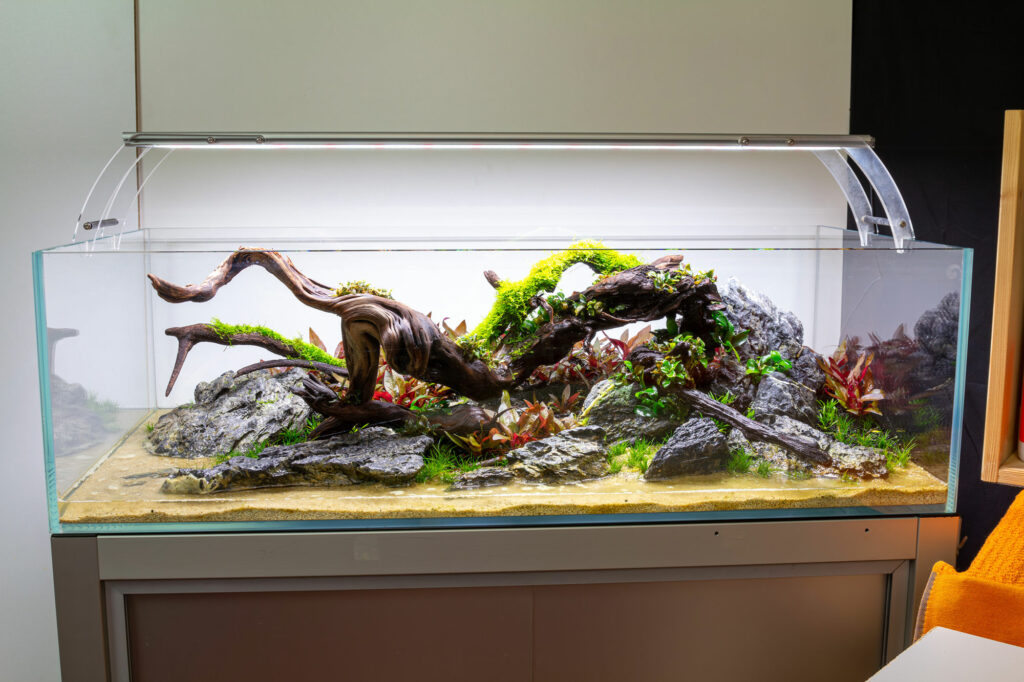
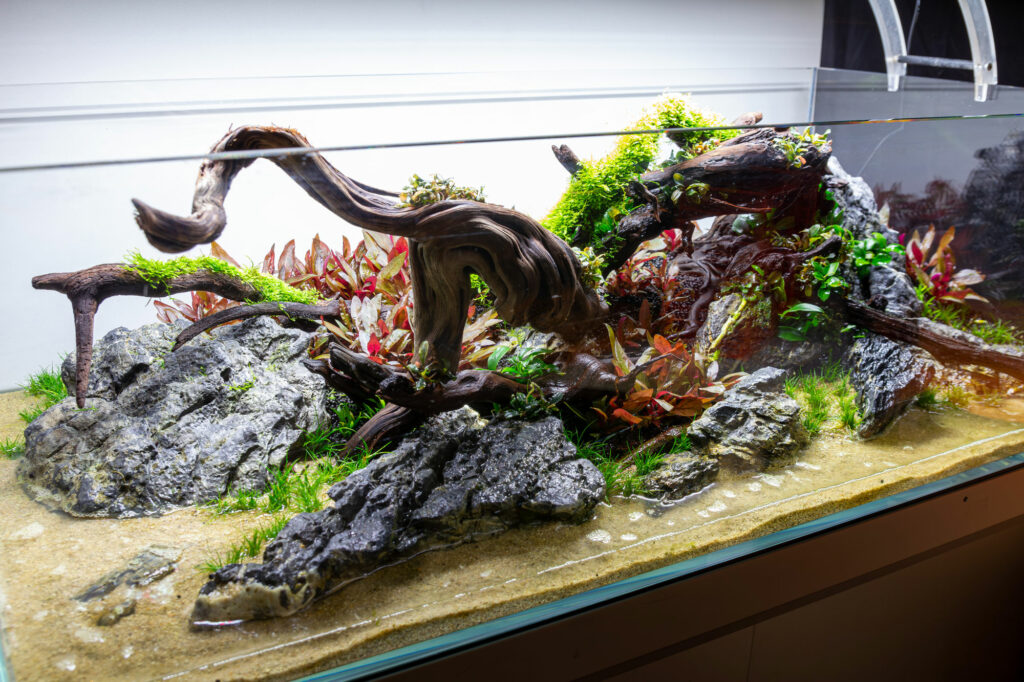
tANK:
Shallow Tank 90x45x27 cm
(90 Net litres of water inserted)

Ceiling light:
GNC Heaven LED – Photoperiod 8 hours of light per day from 14:00 to 22:00.


DOSOPLANT:
Protocol dosing on 90 litres net of water

Below is the fertilisation protocol used, online you will find the automatic calculator that helps you to manage the dosage programming of the dosage pumps, a piece of advice I can give you is to program the dosages at the beginning of the photoperiod and to wait at least 1 hour between the dosoplant dosages.

N.B. the fertilisation protocol is very subjective and attributed to each individual tank, always pay attention to the metabolism of the plants grown: colouration, whether or not deficiencies are present, photosynthesis perling, are all conditions that influence the dosages of the elements in the water.

Start with the dosages recommended by the online calculator, and pay attention that both balanced plant metabolism dosages and also blocked plant metabolism dosages (e.g. post pruning or tank start-up) are given.

Below are the dosages I have customised for this tank, taking into account the health/metabolism conditions and the type of plants grown

DOSOPLANT 1
SUPPLEMENT WITH ORGANIC CARBON AND TRACE ELEMENTS

Dosed amount Monday and Tuesday: 18 mL – Dose time: 14:30
Dosed amount Wednesday to Sunday: 3,5 mL – Dose time: 14:30
https://www.equoitaly.com/prodotti-acqua-dolce/doso_plant_1/

DOSOPLANT 2
SUPPLEMENT WITH MAGNESIUM AND POTASSIUM
Dosed amount Monday to Friday: 4 mL – Dose time: 15:30
Dosed amount Saturday and Sunday: 18 mL – Dose time: 15:30
https://www.equoitaly.com/prodotti-acqua-dolce/doso_plant_2/

DOSOPLANT 3
SUPPLEMENT WITH NITROGEN AND CALCIUM

Dosed amount Monday to Friday: 3,5 mL – Dose time: 16:30
Dosed amount Saturday and Sunday: 18 mL – Dose time: 16:30
https://www.equoitaly.com/prodotti-acqua-dolce/doso_plant_3/

DOSOPLANT 4
SUPPLEMENT WITH PHOSPHORUS AND SULPHUR

Dosed amount Monday to Friday: 12 mL – Dose time: 17:30
Dosed amount Saturday and Sunday: 2,5 mL – Dose time: 17:30
https://www.equoitaly.com/prodotti-acqua-dolce/doso_plant_4/


Ordinary maintenance and weekly water change:
– Weekly water change of 15 litres net, with osmosis only;
– Internal and external glass cleaning;
– Vacuuming of deposited organic material;
– Cleaning of filter wool in the filter, rinsed with water taken from the aquarium;
– Various pruning and rearrangement of the layout.

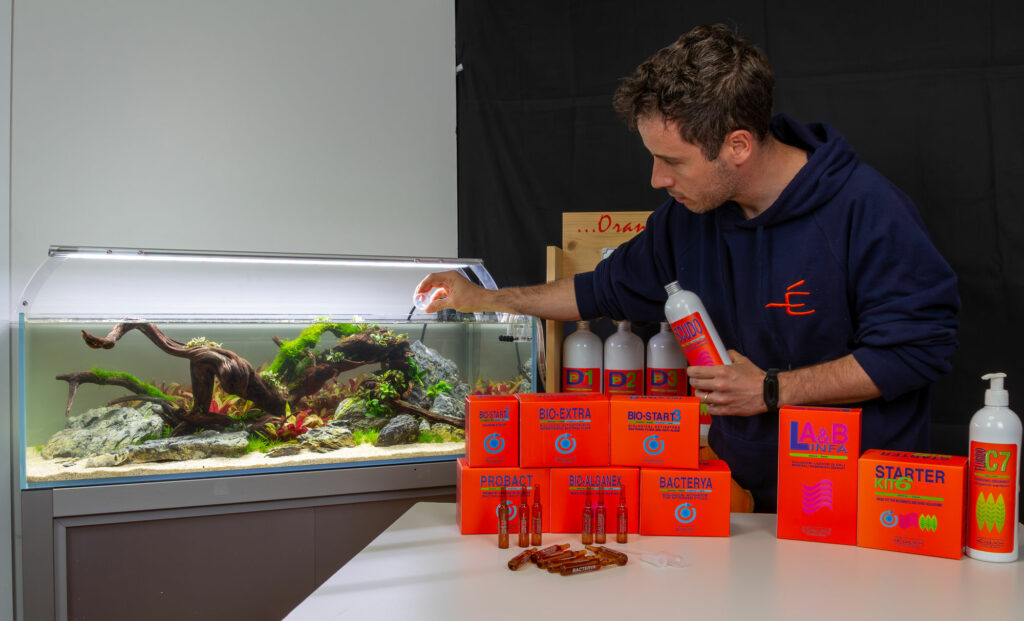
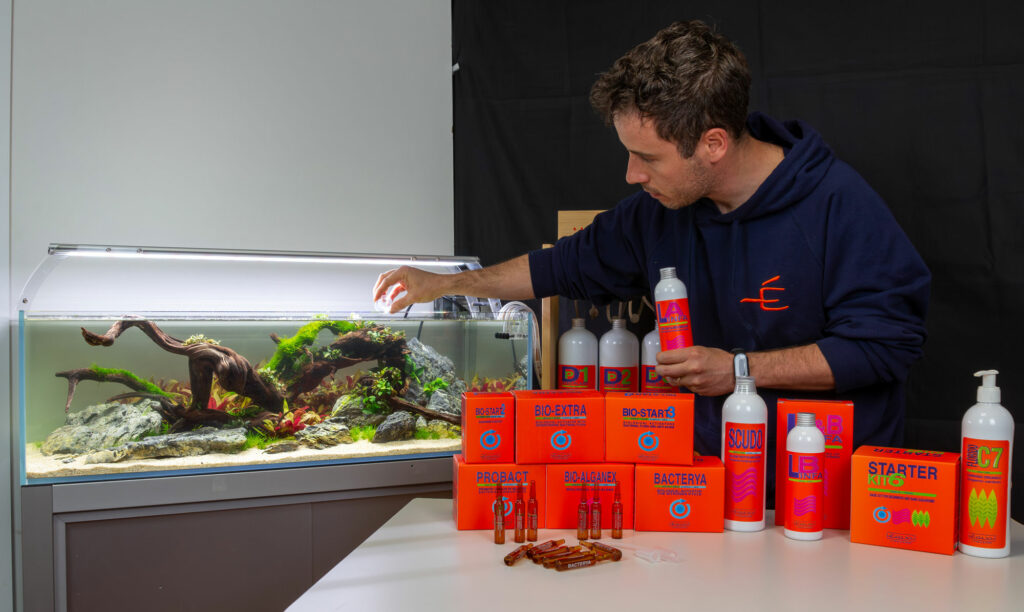
Products placed in Water and Dosage:
– LINFA A &B: to remineralise water to GH 8° dGH and KH 4° Dkh;
– SCUDO: 5 mL;
– BACTERYA: 1 vial for maintaining bacterial flora;
– BIO-ALAGNEX: 1 vial of bacterial flora maintenance;
– NUTROBACT: 1 vial of nutrient support for new bacteria;
– FLORIDO C7: Organic carbon supplementation, two dispenser pressures.

Constant CO2 supply H24 from the moment the tank is filled;


Greetings to all,

Roberto Bielli


Roberto Bielli – DOSO PLANT BALLING METHODE – Part Three

THIRD STEP – DRY START METHODE AND FILLING THE TANK

Products Used:
SCUDO, LINFA A & B, BACTERYA, NUTROBACT, BIO-ALGANEX, FLORIDO C7.

Plants Used:
– Alternanthera reineckii ‘Mini’
– Bucephalandra sp. ‘Red’
– Cryptocoryne parva
– Eleocharis sp.’Minima
– Leptodictyum riparium (stringy moss)
– Anubias barteri var. nana ‘Mini’
– Anubias barteri var. nana ‘Mini Mini’
– Vesicularia dubyana

Tank:
Shallow Tank 90x45x27 cm

Ceiling light:
GNC Heaven LED

Dry Start Methode ‘DSM’:
After the planting phase the tank began its maturation period, in particular I opted for the 30-day Dry Start Methode, let’s see together what this biosystem start-up procedure entails in detail:

– Nebulisation of the tank by means of an ultrasonic nebuliser inserted in the tank and operated by a timer to ensure a medium humidity level;
– Covering the tank with kitchen foil, suitably perforated to ensure constant internal humidity but also minimum air exchange, which is essential to avoid dangerous mould and fungal attacks;
– In this way we also allow the CO2 present in the atmosphere to be continually exchanged within the tank to ensure optimum photosynthetic activity of the plants;
– Maintain a constant water level (derived from reverse osmosis) in the substrate, replenished with Scudo, Linfa A & B and Bio Extra (bacterial floral activator and anti-algae) to promote biological activation of the biosystem;
– Constant 8-hour photoperiod from the first day of DSM;

The main advantages of activating a tank using the DSM procedure are as follows:
– Fast development and anchoring of mosses on wood and furniture;
– Faster plant rooting, as they do not have to change leaf morphology and do not suffer transplant stress;

During the DSM procedure, the tank must be constantly monitored, as the main risks are the occurrence of moulds and fungal attacks, which would compromise the balance of the biosystem and the success of the start phase.

Below are photos of the Dry Start Methode, note the exponential growth of the plants driven by the rich substrate (VIGOR PLUS and Terra Nera) and the perfect anchorage of the mosses on the wood:

Filling the tank:

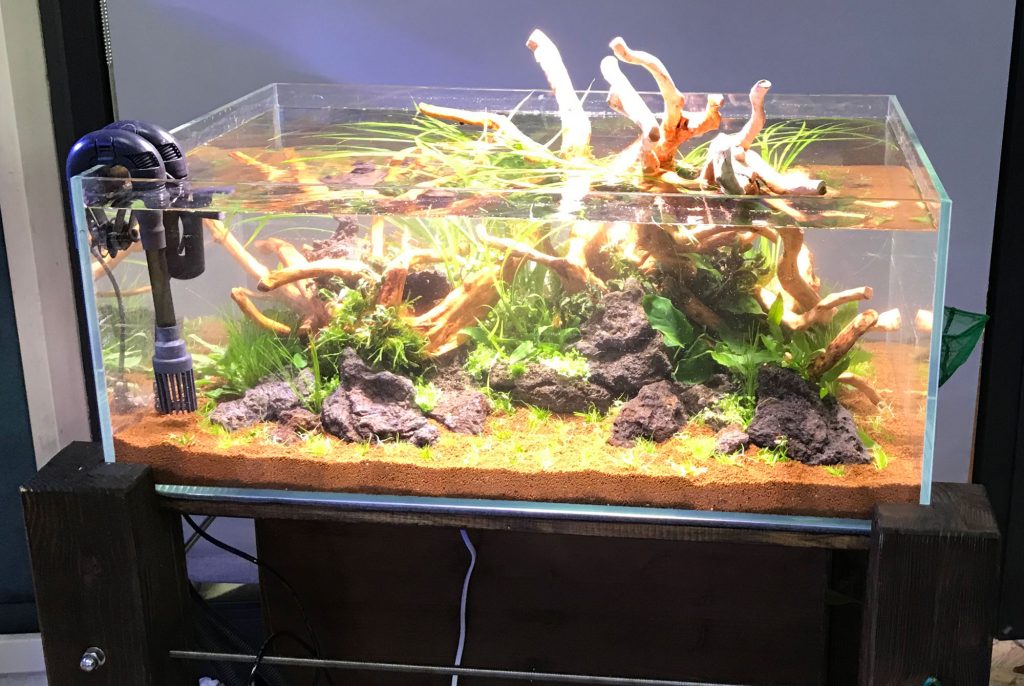
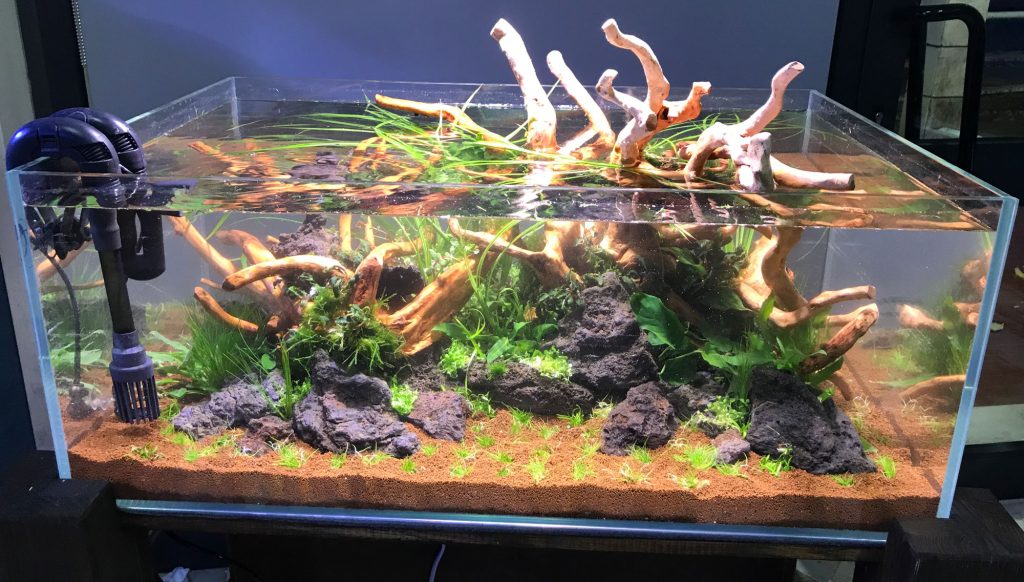
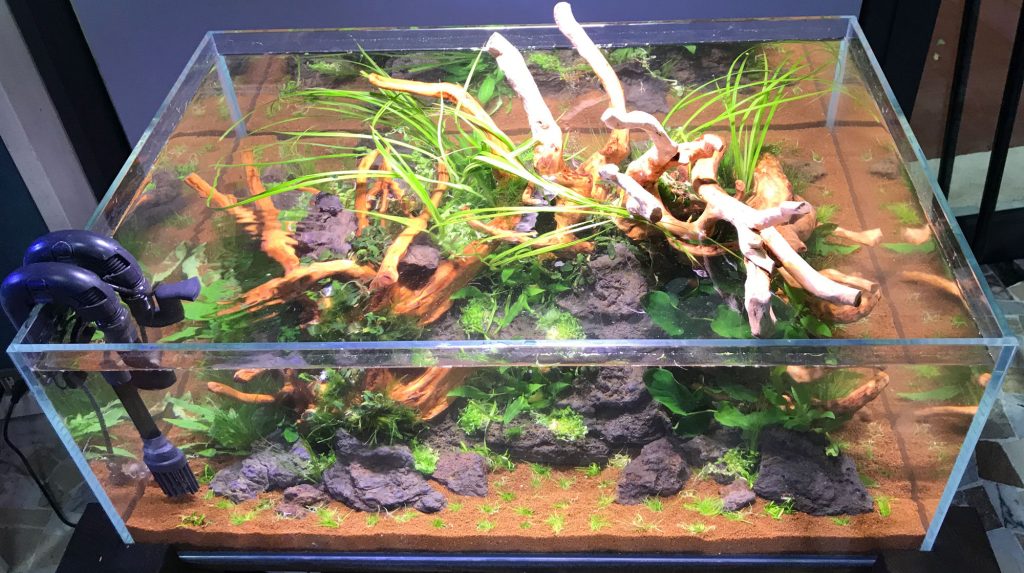
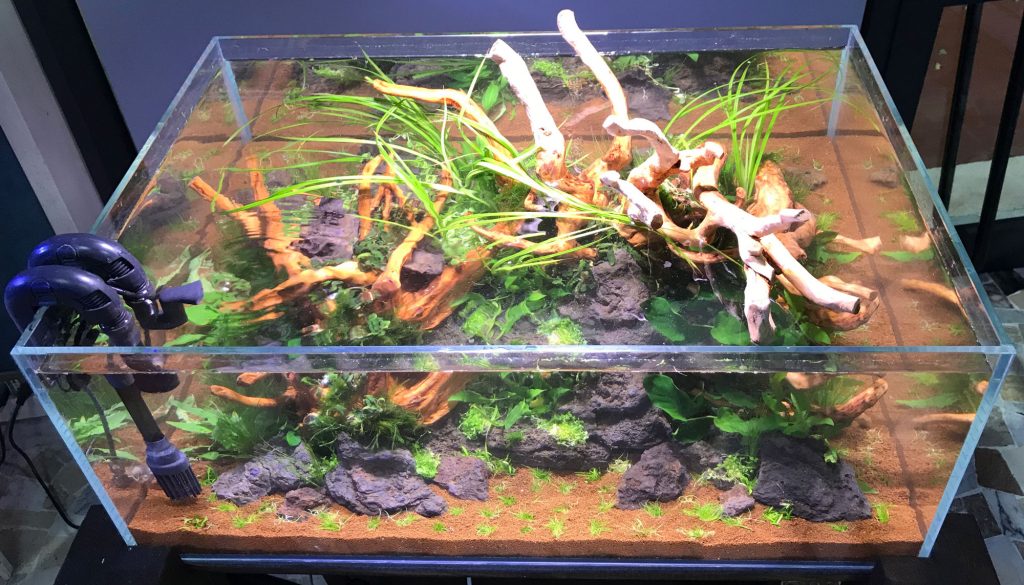
Net litres filled: 90lt water derived from reverse osmosis

Products inserted in Water and Dosage:

– LINFA A &B: to remineralise water to GH 8° dGH and KH 4° Dkh;
– SCUDO: 20 ml in 90 litres net;
– BACTERYA: 2 ampoules for tank activation;
– BIO-ALGANEX: 2 ampoules for tank activation;
– NUTROBACT: 1 vial of nutrient support for new bacteria;
– FLORIDO C7: Organic carbon supplementation, two dispenser pressures;
– Constant CO2 supply H24 from the moment the tank is filled;
– 8-hour photoperiod;
– Activation of the filter, filled with STILLA for the biological filtration part and simple perlon wool for mechanical filtration.

Below are photos of the tank as soon as it was filled, and the moment when I inserted the products for activating and remineralising the water:

Part 4 coming soon, Roberto Bielli

Roberto Bielli – DOSO PLANT BALLING METHODE – Part Two

Second part of Roberto’s new project with E’quo, to build a magnificent aquarium, using the balling method for fresh water.

TANK PLANTING

Products Used:
SCUDO, FLORIDO TABS, BIO-EXTRA


Plants Used:

– Alternanthera Reineckii ‘Mini’
– Bucephalandra Spp. ‘Red’
– Cryptocoryne Parva
– Eleocharis Spp. ‘Minima’
– Leptodictyum Riparium (Stringy Moss)
– Anubias Barteri varietà nana ‘Mini’
– Anubias Barteri varietà nana ‘Mini Mini’
– Vesicularia Dubyana

Planting procedure:

– Preparation of water treated by reverse osmosis with SCUDO;
– Inserting some FLORIDO TABS in the substrate, in the area where we will plant Alternanthera Reineckii ‘Mini’;
– Washing the Cups under running water, to remove residues of the nutrient gel Division of the portions to be planted;
– Planting all plants with roots in the substrate with tongs;
– Tying the mosses with cotton thread on the wood;
– Anchoring of epiphytic plants between the coves of the wood and rocks;
– Misting with water treated by reverse osmosis and SCUDO.

Conduction and Dry Start Methode:

– For about twenty days, the tank will be kept in Dry Start Methode, to allow the plants to take root and the mosses to anchor well in the wood;
– I will constantly spray the tank at least 3 times a day with water treated with reverse osmosis, SCUDO and BIO-EXTRA (activator of heterotrophic bacterial flora) to promote biological activation of the biosystem;
– Photoperiod with 8 hours of light from day one, and CO2 supply with fan;
– Covering the tank with kitchen foil to maintain a high level of humidity.

Objective:

With this project I would like to try to recreate an autumnal setting, the sensation one should have when looking at the aquarium should be that of feeling immersed in an autumn undergrowth.

See you soon with the third part, Roberto Bielli

Roberto Bielli – DOSO PLANT BALLING METHODE – Part One

This is the beginning of Roberto’s new project with E’quo, to build a magnificent aquarium, using the balling method for fresh water.

Foreword:
The study of hardscape is definitely the key part in order to be able to have good results in terms of respecting the photographic rules governing perspective and the golden section of a layout.

It is important to observe nature and learn from nature… so a tip is to take many photos during your excursions or search online for shots to use as inspiration, and then study the perspective and image rules of the analysed photograph.


Objective:
With this project I would like to try to recreate an autumnal setting, the feeling one should have when looking at the aquarium should be that of being immersed in autumn undergrowth.


PRIMO STEP – HARDSCAPE

Products used:
BIO-SOIL 250, BIO-SOIL caps, VIGOR PLUS, TERRA NERA Media, TERRA NERA fine.

Decorative Materials:
Seiryu Stone, Dragon Skin woods, Decorative sand.

Tank:
Shallow Tank 90x45x27 cm.

Ceiling light:
GNC Heaven LED.

Filtration:
Backpack filter loaded with STILLA and Perlon Wool.


2 – Sprinkle BIO-SOIL 250 evenly on the bottom glass of the aquarium and insert BIO-SOIL Caps;

3- Insert VIGOR PLUS, to create a fertile substrate for the plants, approximately 2/3cm in front and 5/6cm towards the bottom of the tank (in the planting area of the plants)
4- Insertion of Medium Black Earth at the back of the tank to create more height difference and ensure good root oxygenation for the plants, as the medium grain size ensures good water passage, an indispensable factor for a tank of this type;
5- Insertion of Fine Black Earth to well define the level and creation of the substrate in the planting area of the tank;
6- Insertion of decorative sand on the front of the tank;
Preparation of the filter, with insertion of stilla for biological purification and perlon wool for mechanical filtration.

Coming soon, part two, Roberto Bielli.

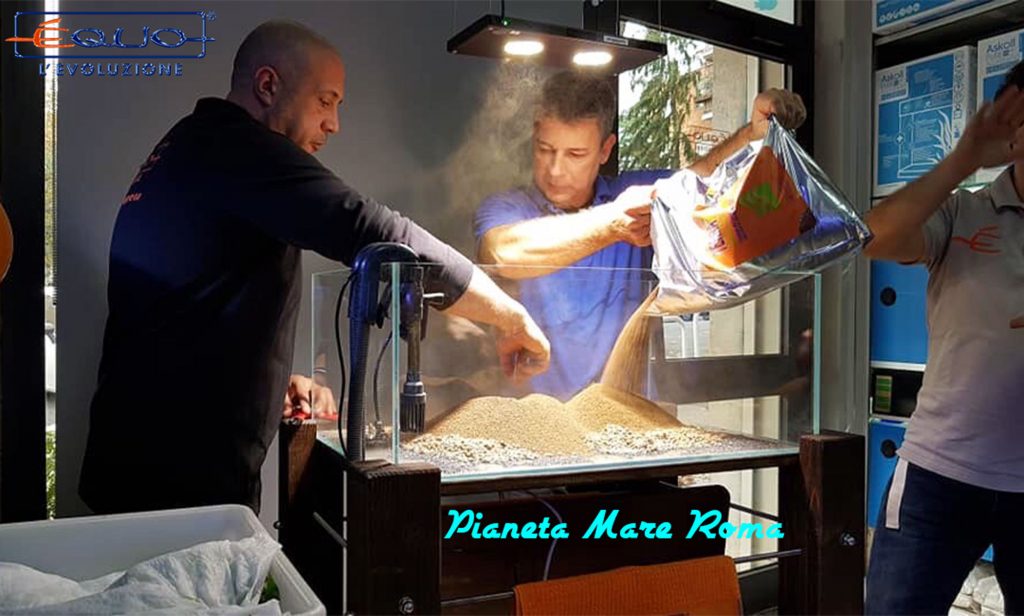
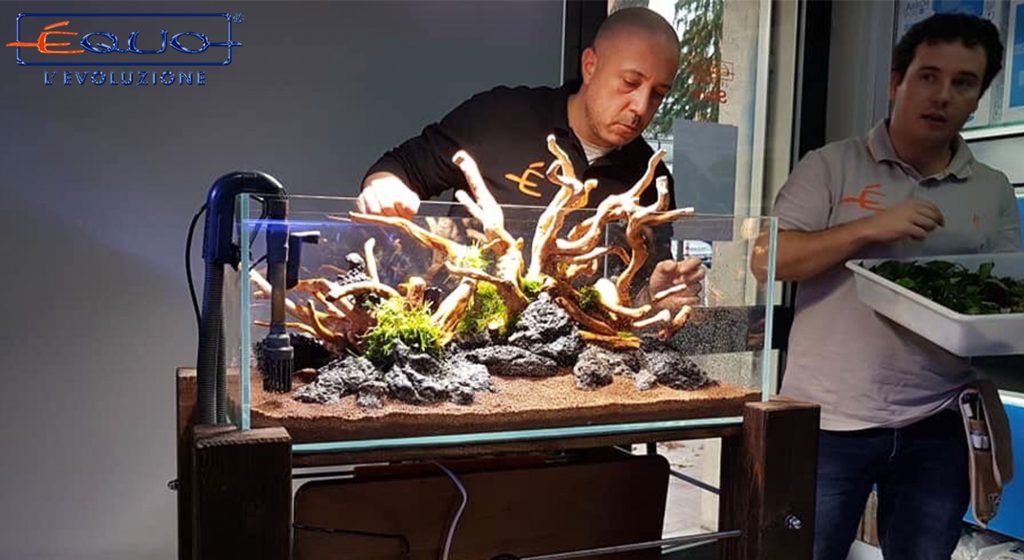
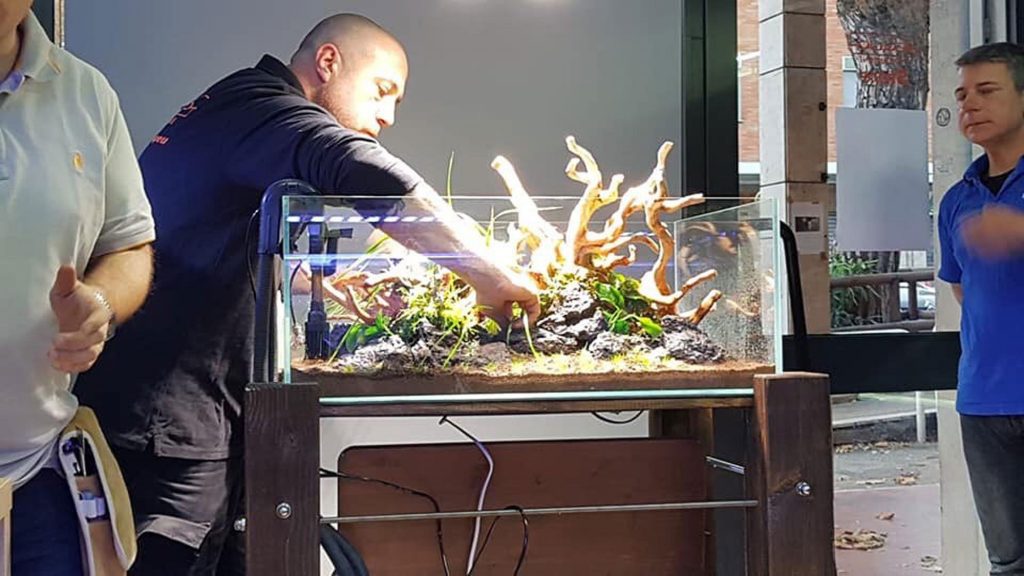
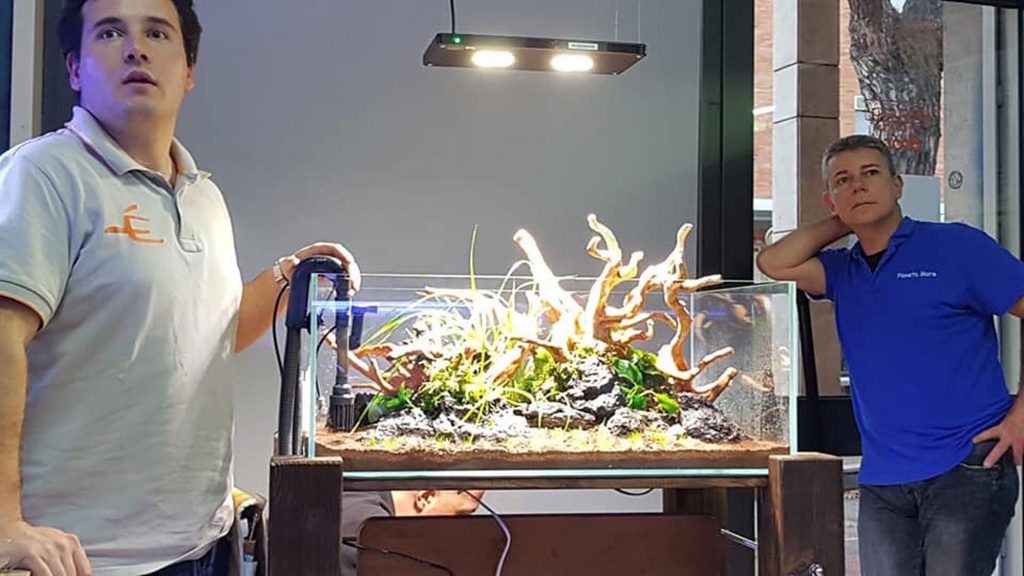
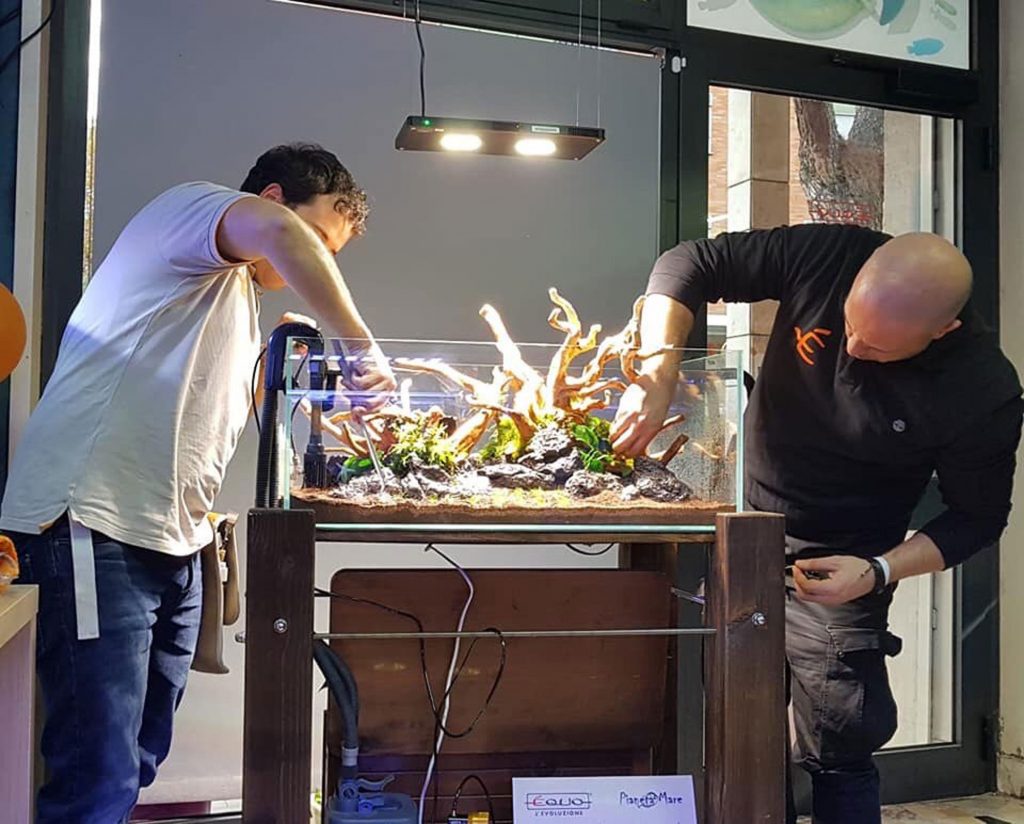
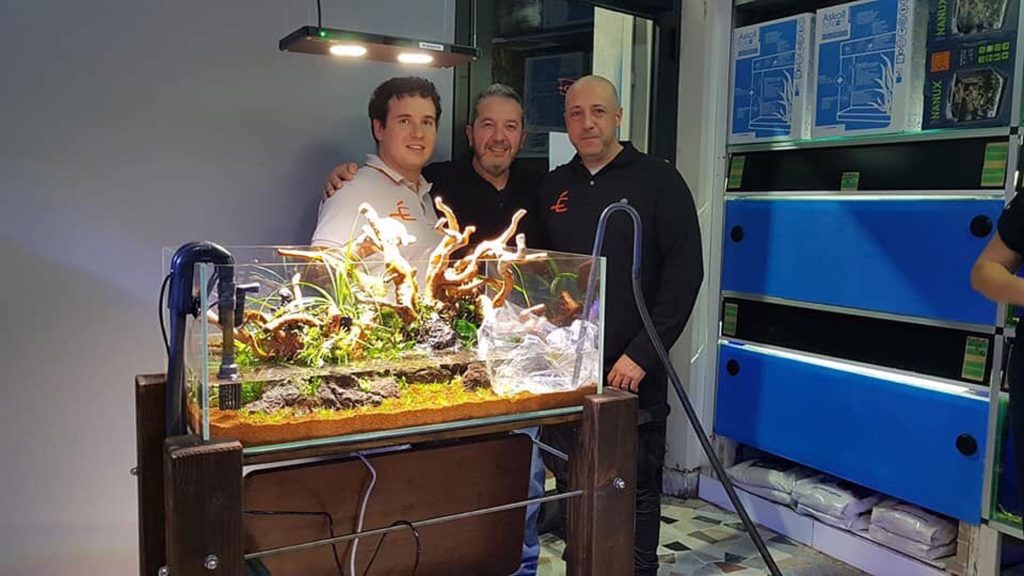
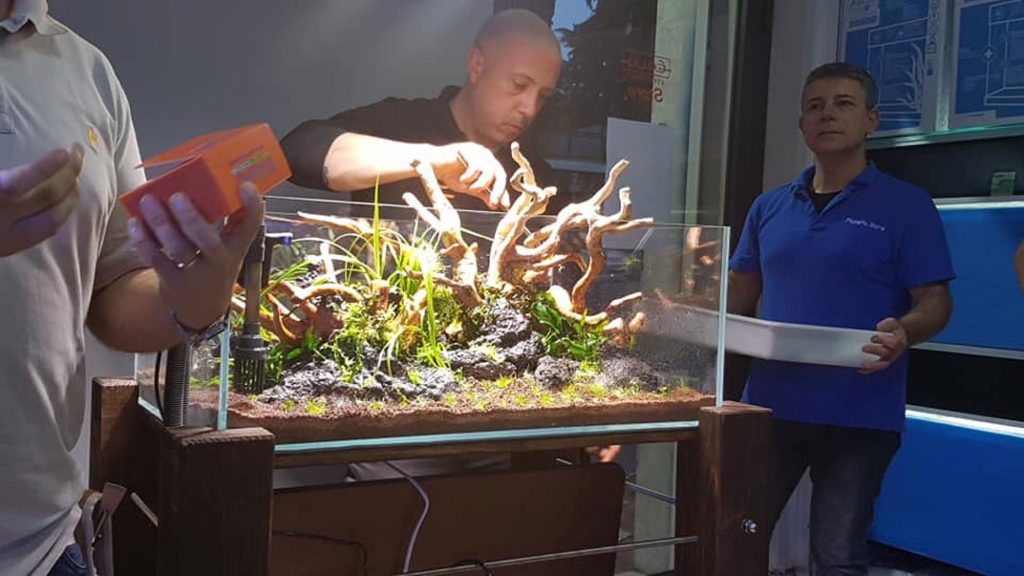
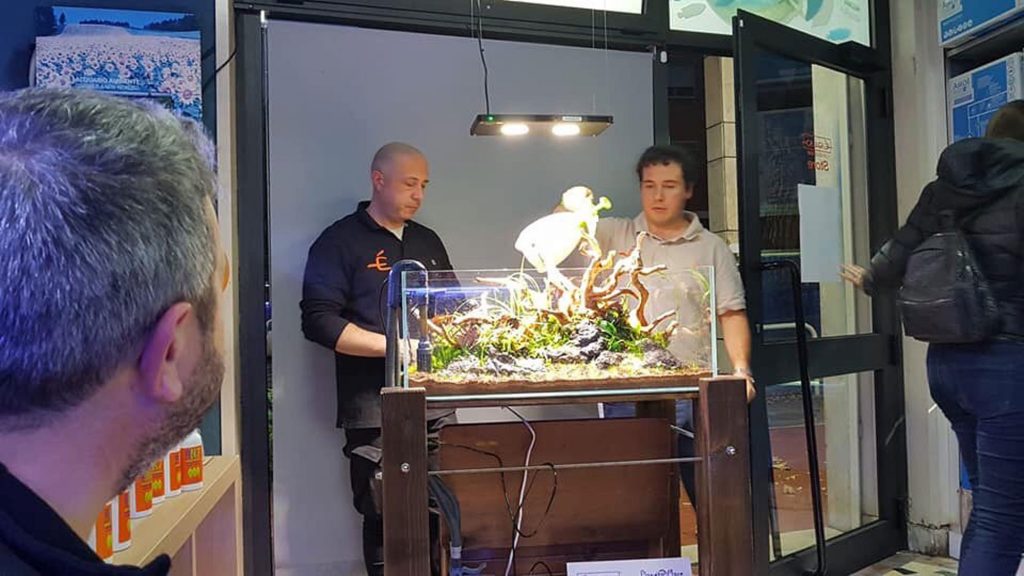
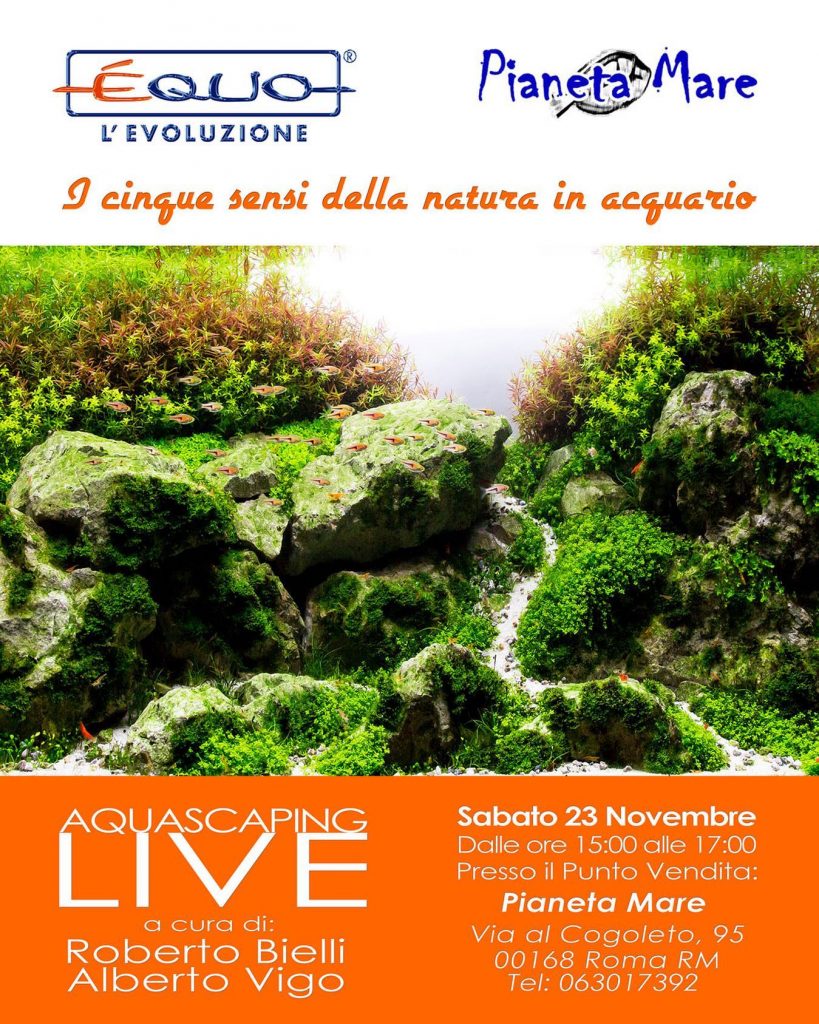
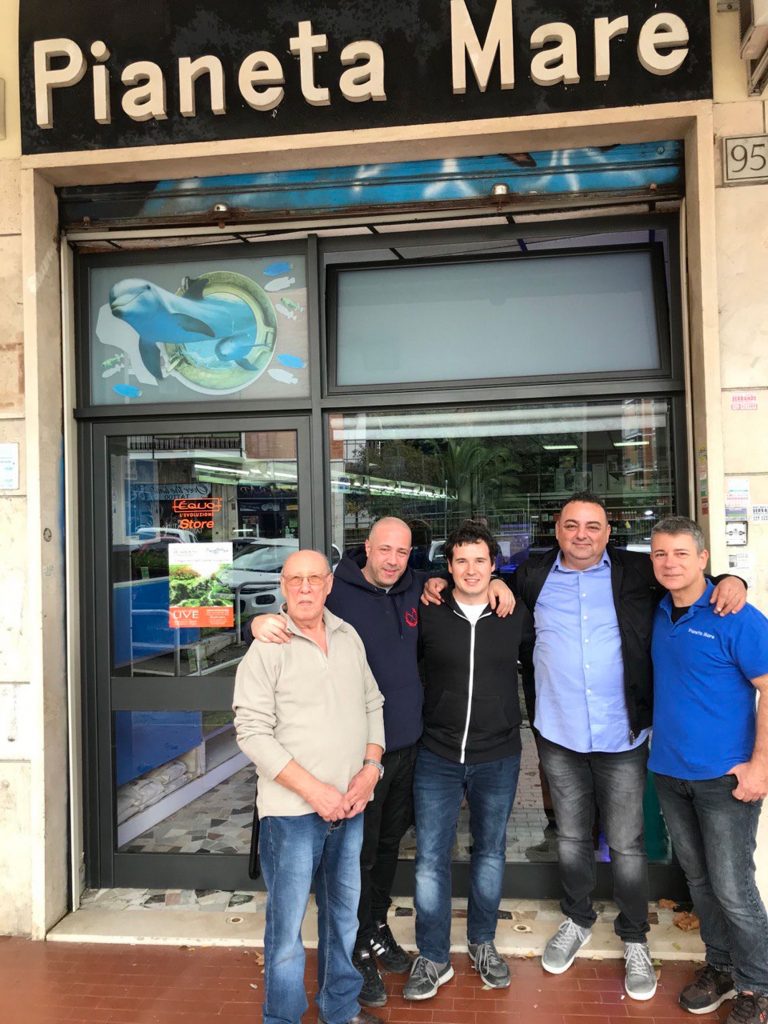
Rome live workshop at PIANETA MARE

Pictures of the live workshop held in Rome, at PIANETA MARE

Pictured from left to right: Giovanni (for those who don’t know, he opened the first aquarium shop in Italy)
Alberto, Roberto, Mauro and David the owner

Many thanks to Giovanni and David, the Orange Scapers, and all participants of the wonderful day!


News DOSO REEF

The study of the chemical reactions that hard corals use to form their skeleton led H. W. Balling to invent a method (named after him) to supplement the consumption of the basic elements. Injecting Calcium, Magnesium and Hydrogen Carbonate into the aquarium in calculated proportions without disturbing the ionic balance of seawater.

E’quo, has improved and facilitated the management of the method by formulating a new, more balanced version, enriching it with Macro and Micro elements, the latter often difficult to assess. The E’quo method consists of 4 complementary aqueous solutions: DOSO REEF 1,2,3,4. These solutions are ready for use with dosometric/peristaltic pumps:

DOSO REEF1: Supplement with Ca, Sr, Mo, Co, Zn;
REEF2 DOSO: Supplement with Mg, K, B, Br, F;
REEF3 DOSO: Supplement with Li, Sb, Ba, Rb, Cu, V, Fe, I;
REEF4 DOSO: NACL-free seawater solution (4 times concentrated)

You will find descriptions, usage and dosage table on the website.


Roberto Bielli IAPLC 2018 – World Ranking 48 – Italy

HARDSCAPE STUDY
The study of the hardscape is certainly the fundamental part of being able to have good results in terms of respecting the photographic rules governing perspective and the golden section of a layout.
It is important to observe nature and learn from nature… so one tip is to take many photos during your excursions or search online for shots to use as inspiration, and then study the perspective and image rules of the analysed photograph.
Here is the inspirational photo that I studied and analysed:

I then use a convenient application to apply the guidelines for analysing and having optical references:

So I start with the actual construction of the hardscape… trying to place the rocks following precise guidelines… and looking at

always the tank with the eye of the camera lens.

As you can see, I have tried to get as close as possible to the guidelines dictated by the inspirational photo, I have helped myself to create depth and rise in the back of the tank with some simple women’s stockings, filled with substrate recovered from previous set-ups, therefore already rich and biologically colonised.
A further important step is the choice of plants to be used, here experience plays a very concrete role, because if you know the bearing and growth speed of plants it is much easier to understand which plants to order in order to achieve the layout idea we have in our heads.
As you can see, already in the design phase we have to define the volumes and spaces that the plants should have… and we will have to keep them respected through pruning.

Selection of plants:

  • Hemianthus callitrichoides “Cuba”
  • Rotala sp. “Gia Lai” / “H’Ra”
  • Rotala sp. “Green”
  • Hygrophila pinnatifida
  • Hygrophila pinnatifida
  • Eleocharis sp. ‘Mini
  • Micranthemum sp. “Montecarlo-3” – 1-2-GROW!
  • Hemianthus glomeratus
  • Marsilea Crenata
  • Riccardia

DSM dry start method for at least 40 days, where we allow the riccardia to anchor itself firmly to the rocks themselves, and then create a very natural effect.

The photograph shows the positioning of the plants chosen, and then planted with a clear idea in mind of the volumes and spaces they should have.

Below is a history of the tank itself:

As you can see, the tank suffered during its first month of maturation, an abundant outbreak of brown diatom algae, which had covered most of the rocks.
Diatoms are algae that feed on silicates, but as I have a newly purchased reverse osmosis system with integrated anti-silicate resins, I am sure that the water used had 0 TDS.
During the maturation phase of a tank, there are so many variables at play that one must arm oneself with patience and bombard the tank with specific products for biological activation.
PROBACT used in conjunction with VIVIDO allowed me to recover the situation. logically, close maintenance and cleaning the rocks with an electric brush accelerated and made the biological action of the bacteria effective.


You see that it is starting to take shape, now it is essential to intervene in pruning and in keeping to the shapes and spaces set in the design phase… most of the time the plants take over and start to grow, taking up the space available… this is where constant maintenance, and pruning, comes in.

And here is the shot that participated in the 2018 IAPLC.. 48th in the ranking
This shot encapsulates all the study done, all the constant work and a lot of patience in the attention to detail and maintenance… everything is encapsulated in a photograph.
That is why we must be able to convey our passion and our art through photography.
As far as fertilisation is concerned, I relied on the super expert line, as I needed to be able to dose products in a targeted and studied way.


The protocol I used could be summarised as follows:

– FLORIDO TRACCE and FLORIDO Fe & Mg dosed once a week in conjunction with water changes;
– FLORIDO C7
, dosed daily;
– FLORIDO K7, I tried to keep Potassium constant to ensure at least 15/20 ppm;
– FLORIDO P7 and FLORIDO N7 dosed after the first month of tank start-up, trying to maintain a sort of link between the plant mass present and the dosage of these elements. I start dosing them with the precise half that the protocol mentions in the instructions and then gradually increase the dose weekly, always maintaining strict control of the plant mass present in the tank… so logically after each pruning carried out I go back to reassess the dosages.

When it comes to activating the BIO SYSTEM, I now constantly rely on BACTERYA, BIO-ALGANEX, PROBACT.
VIVIDO has helped me with algae.
As a conditioner I used SCUDO, and for the salts to be re-integrated LINFA A&B.

I think that from this article you can really understand the great work behind a tank and a project carried out with determination and a lot of willpower.

This tank gave me a strong emotion and great satisfaction by being in the TOP 50 of the 2018 IAPLC, ranked 48th out of more than 2500 participants.

First in the ranking among Italian participants… but what really counts, apart from the international ranking, was the emotion I was able to derive from it during every maintenance and every intervention.

Aquascaping also means spending hours and hours in front of your creation in silence watching and listening to nature.


Special thanks to Equo S.r.l.
Roberto Bielli – May 2018

WORKSHOP LIVE at the AQUA SHOW – Salon Akwarystyk – Varsavia

Some pictures of the LIVE WORKSHOP and the beautiful AQUA SHOW shop – Salon Akwarystyk of our customer Michal Adamek, in Warsaw, Poland.

Departure from Bologna airport, 07/12/2018

Arrivo all’aereoporto di Varsavia, foto con gli amici Polacchi
some pictures of Michal’s shop

This aquarium was taking part in a competition and could not be photographed until the end of the competition.


Typical Polish lunch restaurant


The LIVE WORKSHOP begins


228 days later

Thanks to the participants: Michal, Tomatz, Nataliya, Nicole, Enrico, Alberto, and Mauro